


 Date:2026.10.28
 Views: Loading


The useful question is not merely whether a supplier offers the required system, but whether its documented capabilities cover the interfaces that could affect safety, schedule, performance, and accountability. A structured checklist turns broad claims into evidence that procurement and engineering teams can review together.
Map the Supplier’s Technical Boundary
The first checkpoint establishes where the supplier's responsibility begins and ends. Cell chemistry, pack engineering, rack configuration, thermal management, cabinet or container integration, system controls, testing, and commissioning may be divided among several parties. Every handoff creates specifications that must be coordinated and faults that may be difficult to assign.
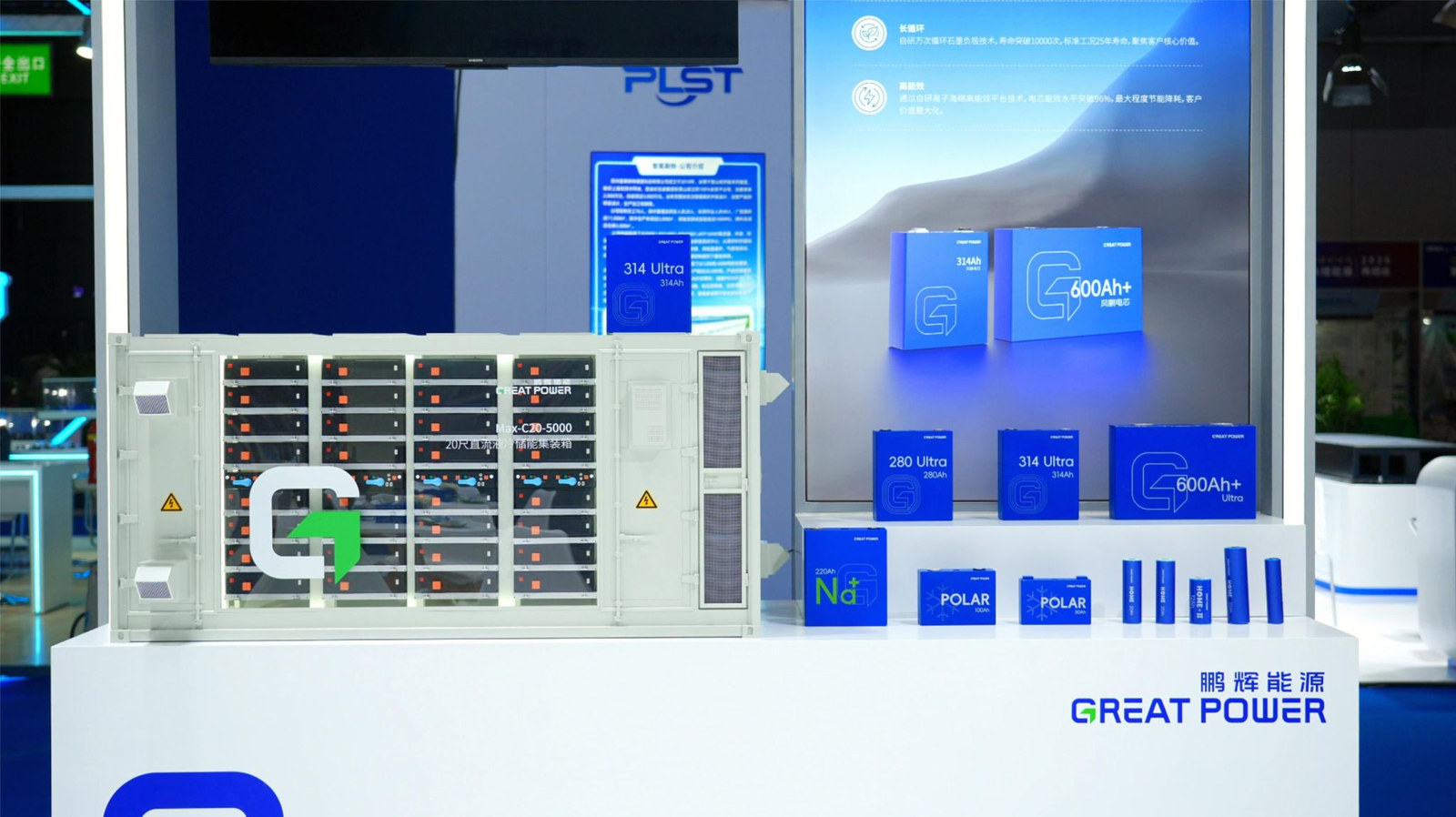
As an energy storage battery manufacturer with a wider technical boundary, we may reduce those interfaces—but we also know vertical integration alone is not proof of suitability. At Great Power, we combine cell manufacturing, pack and rack engineering, cabinet and container integration, system design, and testing.
Utility projects represent one end of the portfolio; residential systems, UPS backup, portable products, and C&I applications fill out the range. The buyer's checklist should record which of these functions are included in the offered scope and which remain with an integrator or project contractor. That scope can be tested with an interface register.
Each row names a boundary, such as battery-to-PCS communication, cooling auxiliary power, fire-alarm output, enclosure sealing, or cloud data access. It identifies each design owner, test method, and post-commissioning responsibility. The register distinguishes a component warranty from a commitment covering system behavior, which prevents commercial language from obscuring responsibility.
Examine Research and Engineering Depth
Research capacity matters when it produces relevant designs, test methods, and responses to field requirements. Headcount and patent totals are useful indicators, but they need context: the disciplines covered, the availability of laboratories, and the connection between material research and system engineering.
At Great Power, we have more than 2,800 engineers, six research institutes, four testing centers, four provincial-level research centers, and a national-level postdoctoral research center. Our research areas include energy storage systems, sodium-ion batteries, secondary and primary batteries, cell structure, battery materials, and analysis and testing.
Our R&D portfolio includes more than 410 patents and patent applications, including over 170 invention patents. These figures indicate a broad technical base, while the B2B review still needs to identify which resources support the proposed project and how engineering changes are controlled.
Trace Quality from Incoming Material to Finished Cell
Quality assurance becomes credible when the inspection chain is visible. Supplier evaluation can follow material acceptance, in-process controls, final-product verification, laboratory sampling, nonconformance handling, and traceability. Our full-process inspection includes material-performance testing, finished-product verification, laboratory sampling, and more than 100 average test items per cell.
Key production processes are monitored around the clock. Our manufacturing facilities hold ISO 9001, ISO 14001, IATF 16949, GJB 9001B, and ISO 45001:2018 management-system certifications. An energy storage battery manufacturer may hold several management certificates, yet the checklist must still confirm their scope, issuing body, validity, applicable facility, and relationship to the supplied product.
Process evidence is more informative than a certificate image presented without those details. Sampling plans deserve particular attention. A test performed on a development unit answers a different question from routine production inspection, and a type test does not show that every delivered unit received the same examination.
Useful evidence identifies the test stage, sample size, acceptance criterion, measuring equipment, and treatment of failures. Serial-number traceability can then connect incoming material, process records, final results, and shipment. This chain makes corrective action practical if a deviation is later found in the field.
Verify Deployment and Support Evidence
Experience across markets can reveal whether documentation, logistics, and technical support have been exercised beyond a factory environment. We were established in 2001, introduced our first-generation energy storage battery in 2011, and now supply solutions in more than 50 countries and regions. Those facts provide a deployment baseline, not an automatic guarantee for a new site.
Procurement teams can request references that resemble the planned power, capacity, climate, grid connection, and application. They can also clarify spare-parts strategy, software access, response responsibilities, training, warranty conditions, and escalation paths. Named processes must support the commitments made by an energy storage company; general service language alone is not evidence during the service period.
A final comparison works best as an evidence matrix instead of a simple ranking. One column can define the required capability, another can identify the responsible party, and columns can record the document, test, certificate, or reference that supports each answer.
Commercial evaluation can then be based on a common scope. The matrix also preserves an auditable basis for negotiation. A defensible choice requires the supplier's responsibilities, engineering resources, quality controls, and delivery evidence to address the technical and commercial risks of the specific project.
 Consulting & Services

 Great Power
