


 Date:2026.10.29
 Views: Loading


The distinction reaches beyond the cooling device: it affects enclosure protection, auxiliary equipment, maintenance tasks, temperature uniformity, installation density, and cost. Cooling cannot be judged as an isolated specification. A stationary energy storage project must compare its consequences against the intended duty. Great Power supplies both architectures because thermal load and service conditions vary across sites.
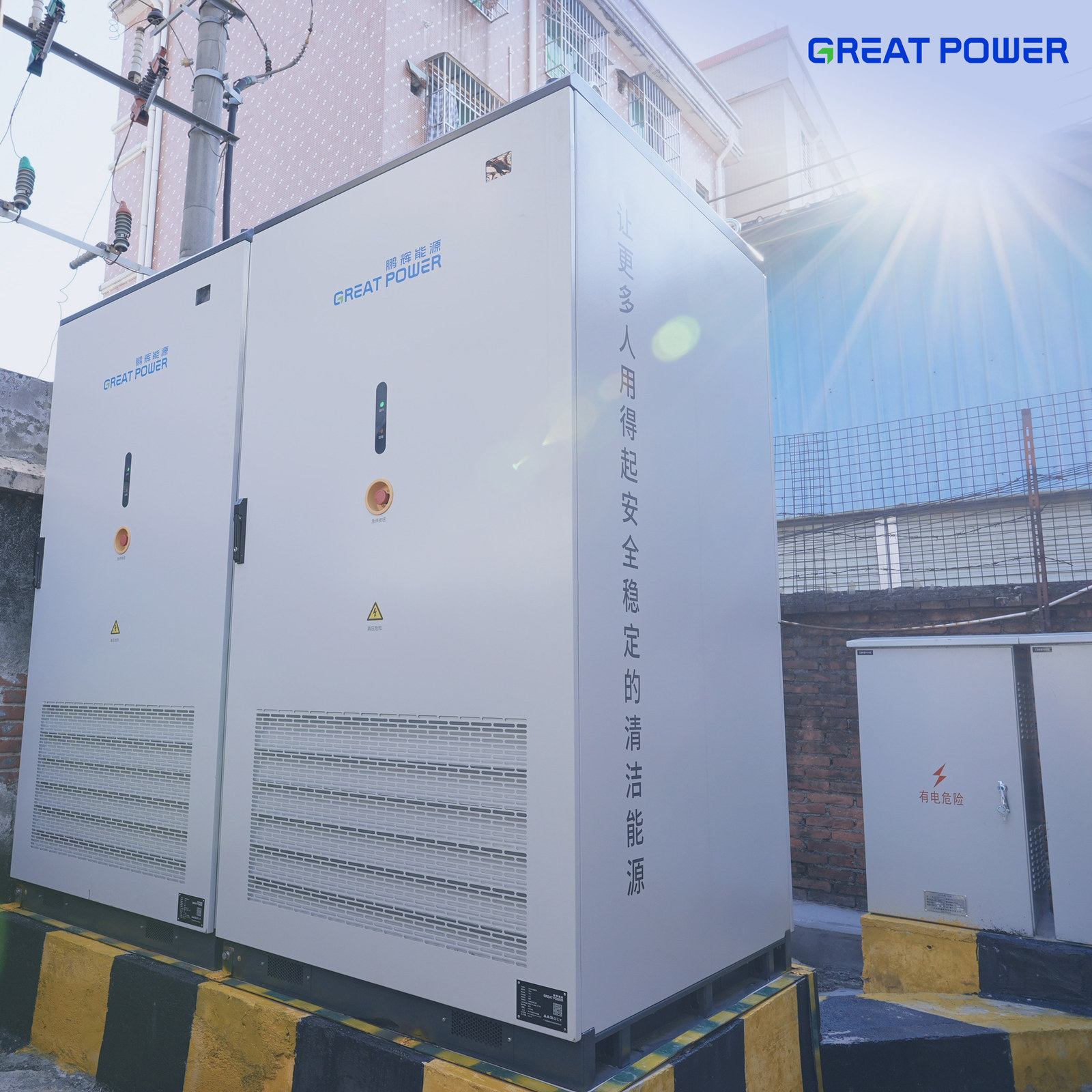
Air and Liquid Move Heat Along Different Paths
Airflow depends on fans, passages, filters, and sufficient contact between moving air and battery surfaces. Its equipment is familiar and can suit applications with moderate heat loads or strong cost constraints. Liquid cooling places a circulating medium nearer to the heat source, increasing control over where heat is collected and rejected.
Pumps, valves, channels, heat exchangers, and leak management become part of that route. Superior heat transfer on paper settles neither system fit nor lifecycle performance. Ambient temperature, dust, humidity, space, operating rate, and access for maintenance determine how each path performs after installation.
Our paired products show the distinction at pack level. LiqPack-280Ah uses liquid cooling, cell-to-cell thermal insulation, and flow channels optimized through thermal simulation. The pack maintains a specified cell temperature difference within 2°C and provides IP67 protection for cabinet and container applications.
AirPack serves the same broad formats with air cooling, a mature and affordable design, and IP2X protection. A great power battery comparison must keep those protection ratings attached to the correct product. IP classifications describe ingress resistance under defined conditions; they do not by themselves establish cooling capacity, fire performance, or lifetime.
Temperature Uniformity Influences Operating Consistency
A thermal gradient creates different operating conditions inside one battery assembly. Cells in warmer locations may age faster or approach control limits sooner, while cooler cells may retain different available capacity. The resulting imbalance can affect how much of the pack is usable under repeated cycling.
Our LiqRack-280Ah uses parallel liquid cooling, modular construction, and thermal insulation between cells. Its specifications include a cell temperature difference within 2°C, an operating temperature range of -40°C to 60°C, and IP67 protection. The rack is also specified to provide 20% longer cycle life than an air-cooled alternative, subject to the applicable comparison conditions. Those figures describe the specified rack and conditions, not every liquid-cooled design.
AirRack follows another engineering balance. AirRack keeps those service tasks accessible through a modular, parallel-air layout. Its rate capability reaches 1C for rapid duty. That rate characteristic may carry more weight in a duty requiring rapid power than in one focused on long discharge duration.
Conversely, dense cycling or limited heat rejection can raise the value of narrower temperature spread. In stationary energy storage, the comparison needs the expected current profile, cycle frequency, ambient range, and allowable derating before a cooling method can be judged.
Maintenance Burden Shifts Across Components
Every cooling route has service points. Air-cooled equipment can require attention to fans, filters, ducts, dust accumulation, and airflow obstruction. Liquid-cooled equipment adds pumps, fluid condition, valves, connections, leak detection, and heat exchangers.
Technician skills, spare parts, inspection intervals, and remote diagnostics affect the practical burden. A system that delivers tight thermal control but cannot be serviced reliably may lose the intended advantage. An air-cooled system installed in a dirty or poorly ventilated space can face a different version of the same problem.
Auxiliary power also belongs in the comparison. Fans and pumps consume electricity whenever the thermal system operates, and their load can vary with ambient conditions and battery duty. That consumption changes net system efficiency, while standby behavior affects annual energy use.
Failure response differs too: loss of airflow, low coolant flow, a blocked filter, or a leak can trigger different alarms and derating logic. For a great power battery deployed in stationary energy storage, the control design should identify each cooling fault, the permitted operating response, and the service action required before full output resumes.
Our Magna-UTL-373 outdoor battery system uses liquid cooling to maintain cell temperature differences below 2°C. The product range is also specified to extend cycle life by 30%, with the improvement dependent on the applicable comparison conditions. These specifications can be relevant where frequent cycling and lifecycle consistency dominate.
They should enter a comparison together with auxiliary energy, maintenance scope, enclosure environment, and the planned operating window. Both thermal architectures sit within the great power battery portfolio. Procurement decisions depend on the model and its system boundary remaining visible.
Let the Operating Duty Decide
Cooling selection becomes defensible after the project defines heat load, power rate, cycling, ambient conditions, space, protection needs, maintenance capability, and budget. Liquid cooling offers tighter temperature control for demanding or dense installations, while air cooling can provide a mature and lower-cost route where conditions permit.
Neither label replaces the detailed model specifications or the site plan. Our role is to provide both options and the associated product evidence. The suitable cooling architecture is the one matched to the project's thermal load, environment, and ability to maintain it consistently.
 Consulting & Services

 Great Power
