


 Date:2026.10.29
 Views: Loading


Treating the two values as interchangeable can oversize one part of the plant and leave another unable to meet the duty. A service definition is an input for utility-scale energy storage sizing. Required power and duration are then corrected for losses, operating limits, degradation, availability, site layout, and grid connection. The energy container count comes after those calculations.
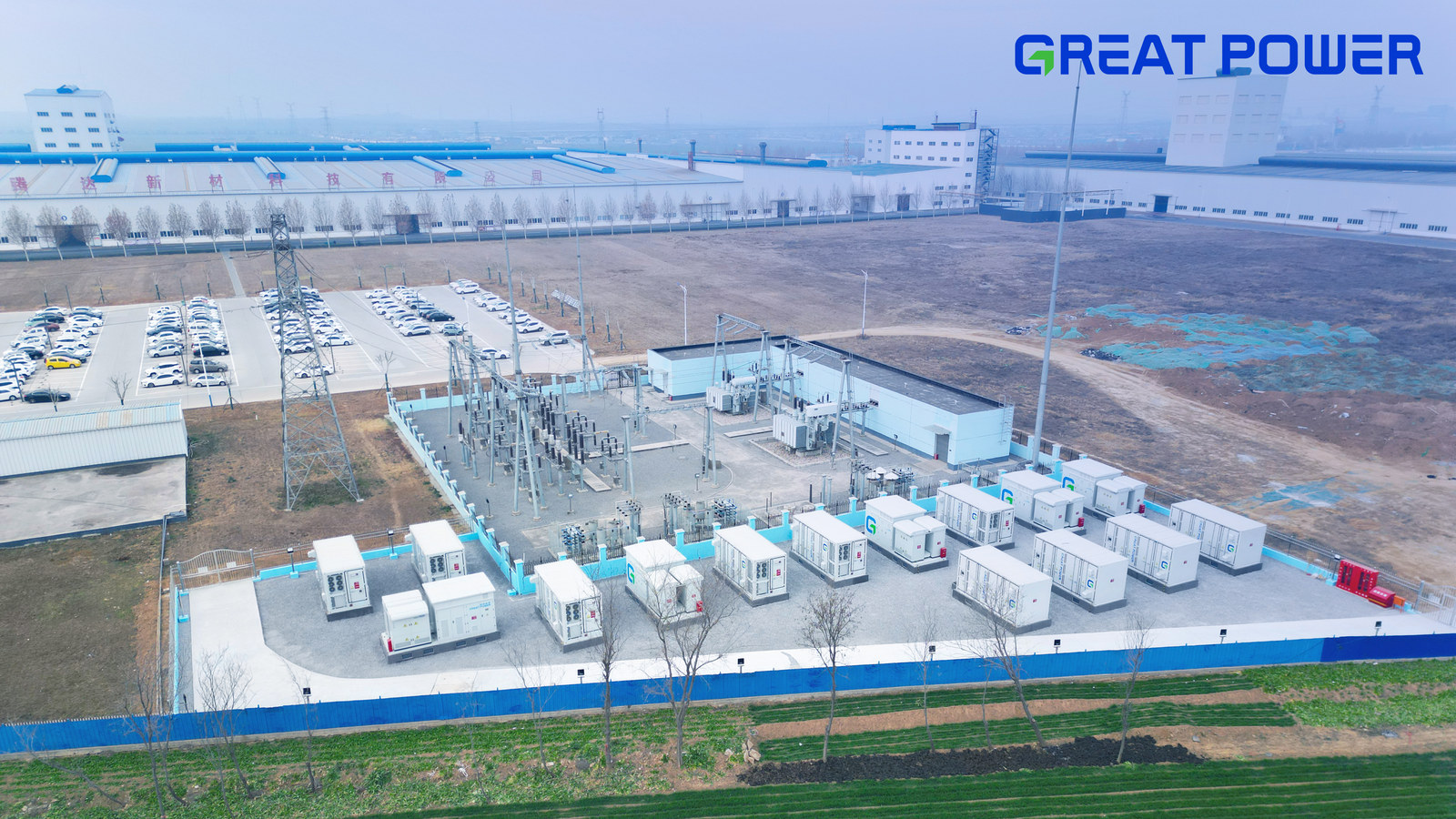
Separate the Power Requirement from Duration
The target service establishes the initial equation. Required energy equals discharge power multiplied by duration, but the load or dispatch profile may not be a flat rectangle. Renewable output, curtailment, peak demand, reserve instructions, and grid-support signals can vary within the interval. Time-series data reveals the highest sustained power and the energy accumulated across the event.
Charging power also needs review because the available window may be shorter than the discharge period. A system that can deliver the target energy but cannot recharge before the next event will not meet a repeating schedule. Several services can share one plant, although their requirements cannot simply be added or assumed to overlap.
Frequency response may need reserved power, while peak shifting consumes energy over a longer interval. Backup obligations may require a minimum state of charge. The sizing case should define which events can occur together and which are mutually exclusive. This operating logic establishes the power and energy envelope for utility-scale energy storage before any product is selected.
Block sizing needs an availability rule. If the project must maintain full contracted power while one unit is isolated, the installed count may need an additional block or a PCS arrangement. Independent cluster management can limit the effect of one unavailable string, but the model must translate that feature into the availability criterion.
For utility-scale energy storage, maintenance windows and forced outages belong in the same capacity check as efficiency and degradation. An energy container count that meets the nominal equation without the required availability margin is not yet an operational design.
Correct Nominal Energy for Real Operating Limits
The initial megawatt-hour requirement is usable energy at the delivery point. Nominal battery capacity must also account for the permitted state-of-charge window, conversion losses, auxiliary consumption, temperature conditions, degradation, and reserve margin. Efficiency belongs to the same electrical boundary as the service requirement.
For Great Power's Max-20HC-5000, the loss assumption should follow operating rate: published DC-side RTE is 96% at 0.25P and 95% at 0.5P. The same product lists battery-cell efficiency of at least 96%. Service life changes the required starting capacity or augmentation plan. For Max-20HC-3440, the published design horizon is 15 years, and DC charge-discharge efficiency exceeds 95%.
It is also described as simply scalable. A sizing model still needs a project-specific degradation curve and end-of-life capacity requirement because a design-life statement does not provide annual retained energy. Our Great Power sizing work uses these published parameters as calculation inputs while retaining the project's own duty profile.
Translate the Result into Physical Units
Once corrected power and energy are known, planners can compare modular products. Our utility portfolio includes Max 6250, Max 5000, Max 3440, Magna-UTL outdoor DC systems, and rack or container configurations. Max-20HC-6250 uses self-developed Ultra 588 Ah cells, a high-safety liquid-cooled pack, and a six-level safety protection system.
Max-20HC-5000 features an integrated 20-foot GP container design, with IP55 protection for the overall system and IP67 protection for the battery pack. It is intended for wind, photovoltaic, peak-valley-price, and fluctuating-load scenarios. Dividing the project requirement by a unit rating gives only a preliminary count. Redundancy, block arrangement, PCS sizing, transformer grouping, cable limits, maintenance isolation, and available land can change the practical total.
Rounding must occur at the correct level: a fraction of a container or outdoor unit generally becomes another complete block unless the architecture supports a smaller increment. The design should also verify whether the chosen unit can meet both the energy total and the maximum required power.
Bring Layout, Availability, and Controls into the Design
Physical installation constraints can make an otherwise suitable option impractical. Magna-UTL-419 and Magna-UTL-373 provide independent single-cluster management, availability above 95%, liquid cooling that keeps cell temperature differences below 2°C, and single-unit weight below four tons for on-site hoisting. These characteristics affect block independence, lifting plans, access routes, and service strategy.
Max-20HC-3440 supports third-party SCADA and cloud EMS, so control interfaces can be assessed together with capacity expansion. The engineering package still needs site ambient data, geotechnical and access constraints, fire and electrical requirements, the point-of-connection study, grid-code functions, auxiliary loads, and the intended control hierarchy.
It also needs acceptance criteria for power, usable energy, availability, and end-of-life performance. Our modular storage products provide the building blocks, while project-specific calculations determine how many units are required. Sound sizing derives the plant from its service obligation instead of forcing the obligation into a preselected product count.
 Consulting & Services

 Great Power
