


 Date:2026.10.29
 Views: Loading


Containerized battery storage creates value when the enclosure organizes those relationships, protects the correct zones, and exposes clear interfaces to the wider plant. Cell capacity, thermal management, protection, efficiency, and controls meet within the Max family from Great Power, illustrating the scope of that system boundary.
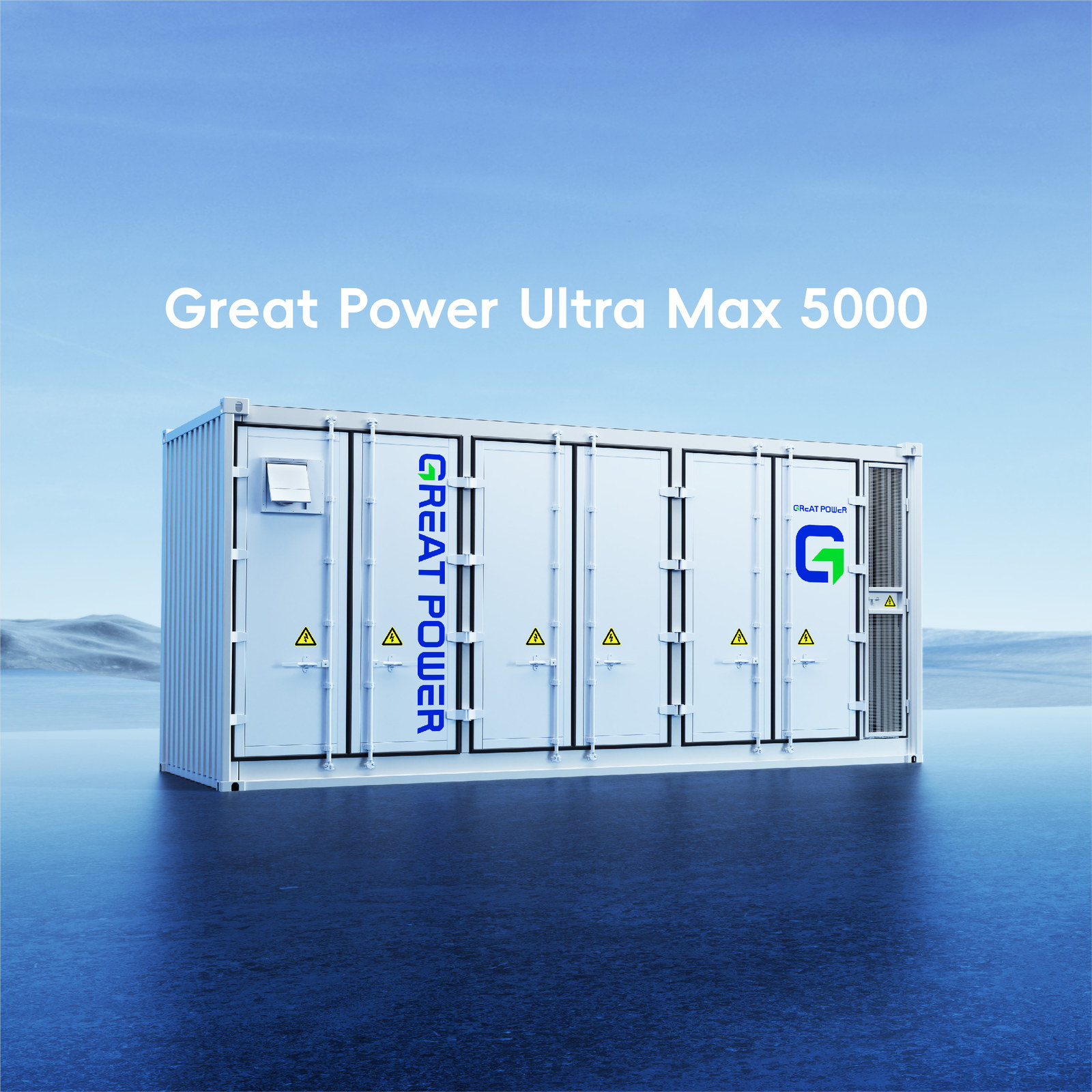
Protection Ratings Apply Within Defined Enclosure Zones
Different areas inside one container face different environmental and electrical exposures. Max-20HC-5000 lists IP55 protection for the overall system, IP67 for the battery pack, IP54 for the high-voltage box, and IPX5 for the electrical compartment. Those ratings should remain attached to their stated zones.
A pack rating cannot be assumed for every cabinet, and ingress protection does not replace thermal-runaway or electrical-safety evidence. The product also complies with UL9540A and NFPA855. The product also complies with UL9540A and NFPA855 according to the supplied information, creating additional reference points for fire-propagation and installation review, creating additional reference points for fire-propagation and installation review.
Liquid cooling forms another protective and operating layer. Heat removal affects cell temperature consistency, available output, and the conditions under which protection limits are reached. The high-safety liquid-cooled pack in the Max range does not operate as an independent accessory.
Its protective function depends on enclosure separation and multi-level safeguards. In an energy container, cooling alarms, pump power, sensor communication, and maintenance access belong to the system design. Their condition influences whether the published electrical performance remains available during actual duty.
The value of six-level protection depends on mapping each level to the event it handles. The six-level protection system is intended to address different fault conditions across the battery cabinet. Its functions, triggering conditions, and response measures must be verified for the proposed system configuration. Relevant protection signals must also be connected to the plant controller and the site's response procedures.
A factory-integrated design can coordinate those relationships before delivery, while commissioning confirms that external fire, communication, and shutdown interfaces behave as intended. This turns containerized battery storage from a collection of protective devices into a sequence of barriers with defined responsibilities.
Footprint Gains Depend on Published Operating Conditions
A 20-foot GP container houses the Max-20HC-5000, whose stated battery-cell efficiency is no less than 96%. DC-side round-trip efficiency is 96% at 0.25P and 95% at 0.5P, which shows why the operating rate must accompany an efficiency figure. Energy density is reported as 50% higher for this system configuration.
Greater density can reduce the number of physical blocks or the land occupied for a given energy requirement, although the final effect depends on spacing, access, fire design, cable routing, and auxiliary equipment. High integration also changes installation planning. Where more equipment is factory-integrated, on-site connections may be reduced. Transport, lifting, foundation, and access requirements still depend on the unit's dimensions, weight, and installation layout.
Containerized battery storage projects must evaluate both sides of that exchange. A footprint advantage on a datasheet becomes a site benefit only after the layout preserves maintenance clearances, emergency access, drainage, ventilation, and the required electrical separation.
Integration Reduces Interfaces Across Project Functions
Cells form the first internal layer; packs then connect them to high-voltage equipment, cooling, sensing, and control. Factory integration can shorten the number of interfaces completed on site and make transport, placement, and commissioning more repeatable. Our Max-20HC-6250 features a six-level safety protection system for its liquid-cooled energy storage cabinet.
Its high-safety liquid-cooled PACK is built around our self-developed Ultra 588 Ah cells. The large cell format and integrated equipment address different tasks: cell capacity influences the component count, while the pack and cabinet architecture manage heat, electrical boundaries, and abnormal conditions.
An energy container still needs a precise supply boundary. Power conversion, transformers, switchgear, fire interfaces, auxiliary supply, communications, and civil works may sit inside or outside the vendor package. A compact enclosure does not remove those interfaces; it relocates them to defined connection points.
An interface schedule for containerized battery storage procurement must name the owner, document, and acceptance test for every connection. The benefit of integration is strongest when fewer handoffs also mean clearer responsibility across the full project delivery chain.
Plant Value Requires Compatible External Control Interfaces
Max-20HC-3440 is described as highly integrated and scalable, with more than 95% DC charge-discharge efficiency and a 15-year design life. It supports third-party SCADA and cloud-based EMS integration.
Those interfaces allow container status, alarms, power commands, and operating data to connect with plant-level supervision. Wind, photovoltaic, grid, peak-valley, and fluctuating-load applications position our Great Power containerized solutions against distinct dispatch and external-coordination demands.
A procurement review can now move from features to verifiable boundaries. It can confirm the proposed cell and pack, cooling arrangement, zone-specific protection, efficiency test condition, control protocol, service access, scalability, and responsibility for external equipment under the site's intended operating duty profile.
None of those checks concerns the steel box alone. The practical benefit of an energy container comes from the way its internal systems coordinate power, heat, protection, data, and maintenance as one operating unit.
 Consulting & Services

 Great Power
