


 Date:2026.10.30
 Views: Loading


The energy container functions as both a physical enclosure and an engineering boundary. Its design influences transport, installation, commissioning, expansion, and service. Energy storage utilities gain the most from this format when the module fits the intended duty and when every connection to power conversion, controls, fire systems, and civil works remains explicit.
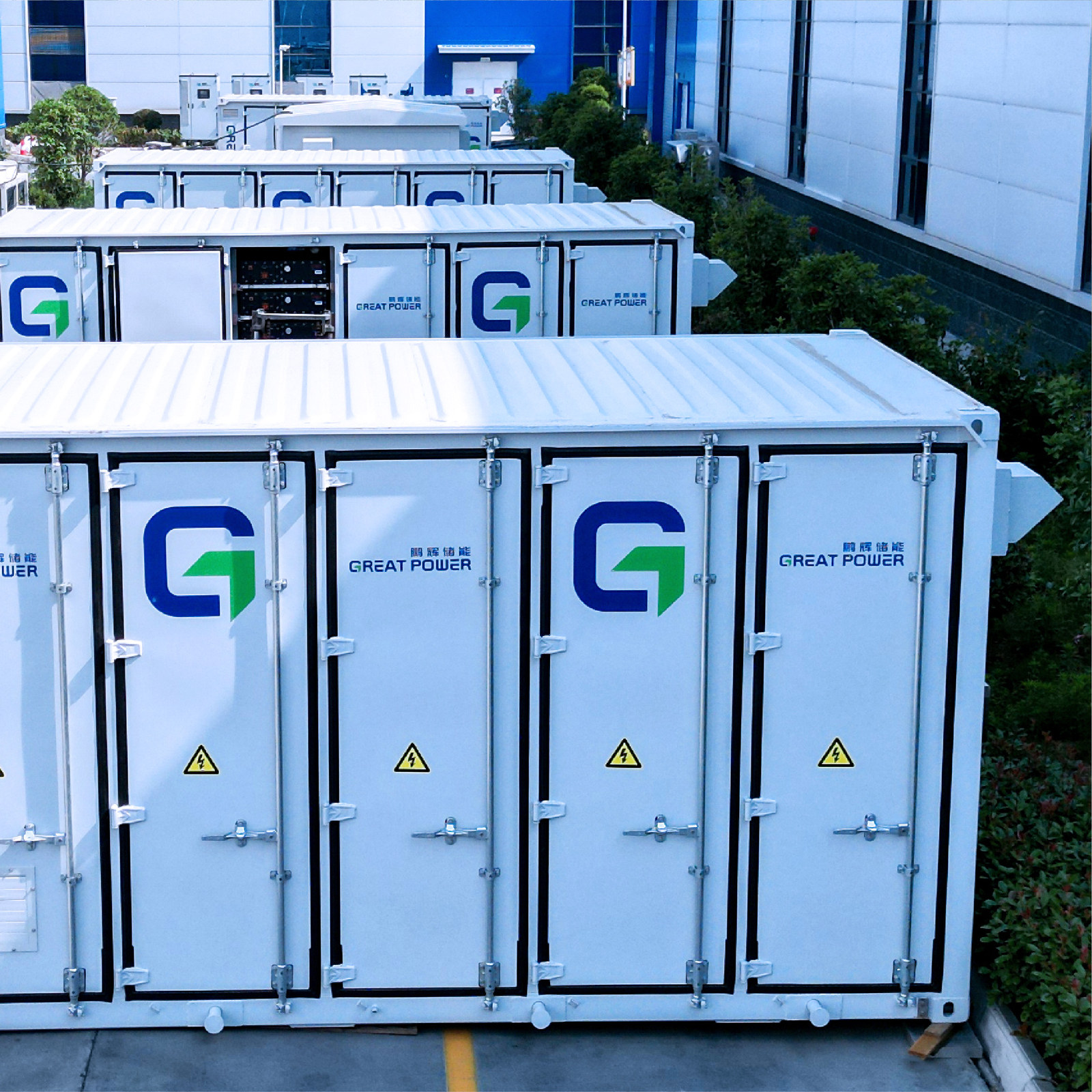
Outdoor Units Offer Another Modular Route
Not every project requires the same degree of equipment concentration. Our Magna-UTL outdoor DC systems use liquid cooling to maintain cell temperature differences below 2 °C and support independent single-cluster management within the specified product configurations. These systems are specified with availability above 95% and a single-unit weight below four tons to support on-site hoisting and installation. A smaller outdoor block may suit layouts that favor distributed placement, granular maintenance, or constrained lifting.
A larger energy container may suit projects that prioritize standardized high-capacity units and fewer site-level enclosures. The choice changes civil and operational planning. More small units create more foundations, connections, and communication nodes, while fewer large units concentrate capacity and may increase the consequence of one unavailable block.
Access routes, crane limits, fire spacing, climate, and expansion can shift the balance. Civil limits, lifting access, maintenance strategy, and expansion plans determine whether Great Power's distributed outdoor units or one larger containerized block fits the site.
Service strategy adds a time dimension to the layout. Technicians need safe isolation, replacement access, diagnostic data, spare parts, and a route to return equipment to operation. Distributed units may permit smaller maintenance increments, whereas a dense energy container can centralize shared auxiliaries. Duty and availability determine which arrangement is practical.
Applications Begin with the Duty Profile
Utility-scale storage often combines renewable shifting, grid support, peak management, or other dispatch requirements. Commercial and industrial sites may focus on tariffs, demand peaks, resilience, or local photovoltaic use. UPS and communication backup emphasize rapid response and continuity.
Our platform references span zero-carbon parks and commercial complexes, plus data centers, intelligent PV, city transit, 5G stations, microgrids, and mining areas. The label identifies a setting, but power, duration, cycling, ambient conditions, and control obligations define the design.
A project can use those requirements to decide container size, cooling method, protection boundary, efficiency condition, control interface, and installation format. Energy storage utilities determine the architecture before a product count is calculated.
The engineering link between our Great Power Max container platforms and Magna outdoor systems is the module that organizes power, heat, protection, data, and service for the site. Whether containerization simplifies a project depends on designing its interfaces and operating duty together.
Energy and Data Follow Different Internal Paths
Electrical energy moves from cells through packs and racks toward high-voltage collection equipment and the external power system. Measurements and commands move through battery management, local controls, monitoring, and plant-level interfaces. Cooling circuits carry heat away from the same assemblies, while protection devices interrupt abnormal electrical or thermal conditions.
A containerized design has to keep these paths coordinated without confusing their responsibilities. Compact integration saves little if a sensor cannot identify the affected cluster or if maintenance access requires disturbing unrelated equipment. A 20-foot GP container houses these functions in our Great Power Max-20HC-5000.
At 0.25P, the platform records 96% DC-side RTE; at 0.5P, that figure is 95%, alongside battery-cell efficiency of at least 96%. Those figures belong to different measurement boundaries and operating rates. An energy container specification needs to retain those conditions because cell efficiency cannot represent every auxiliary and system loss. Performance at one rate supplies no complete description of another duty.
Modularity Moves Work but Does Not Remove Interfaces
Factory integration can reduce the number of assemblies completed outdoors and make repeated project blocks more consistent. Yet the site still needs foundations, lifting plans, cable routes, drainage, access, electrical isolation, communications, and coordination with power conversion or transformation equipment.
Max-20HC-5000 provides IP55 protection for the overall system and IP67 protection for the battery pack. Its also references UL 9540A testing and NFPA 855 requirements, which must be considered within the applicable system configuration and installation conditions.. Each item supports a part of the design review, but none closes every external interface by itself.
Scalability also depends on how blocks behave together. Third-party SCADA and cloud EMS connect the Max-20HC-3440 to plant supervision; the platform exceeds 95% DC charge-discharge efficiency and carries a 15-year design life. Adding units expands energy and power only if the electrical grouping, communications, auxiliary supply, and control hierarchy support that expansion.
For energy storage utilities, repeatable modules can simplify drawings and commissioning, while plant-level logic still has to coordinate setpoints, alarms, availability, and maintenance states across the fleet. Commissioning tests whether the designed boundary survives installation.
Polarity, insulation, protection settings, sensor values, coolant condition, communications, command priorities, and emergency shutdown paths need confirmation before commercial operation. A factory-tested block can reduce uncertainty, but transport and field connection introduce new conditions. The acceptance plan traces signals and power across both internal equipment and external interfaces during commissioning.
 Consulting & Services

 Great Power
