


 Date:2026.10.30
 Views: Loading


That distinction changes the development questions, but it does not remove the need to test heat, mechanical abuse, electrical abuse, and low-temperature behavior. At Great Power, our sodium-ion program is best understood as an evidence sequence: material routes were developed, cells reached trial production, samples entered evaluation, and a demonstration project created a path toward larger application.
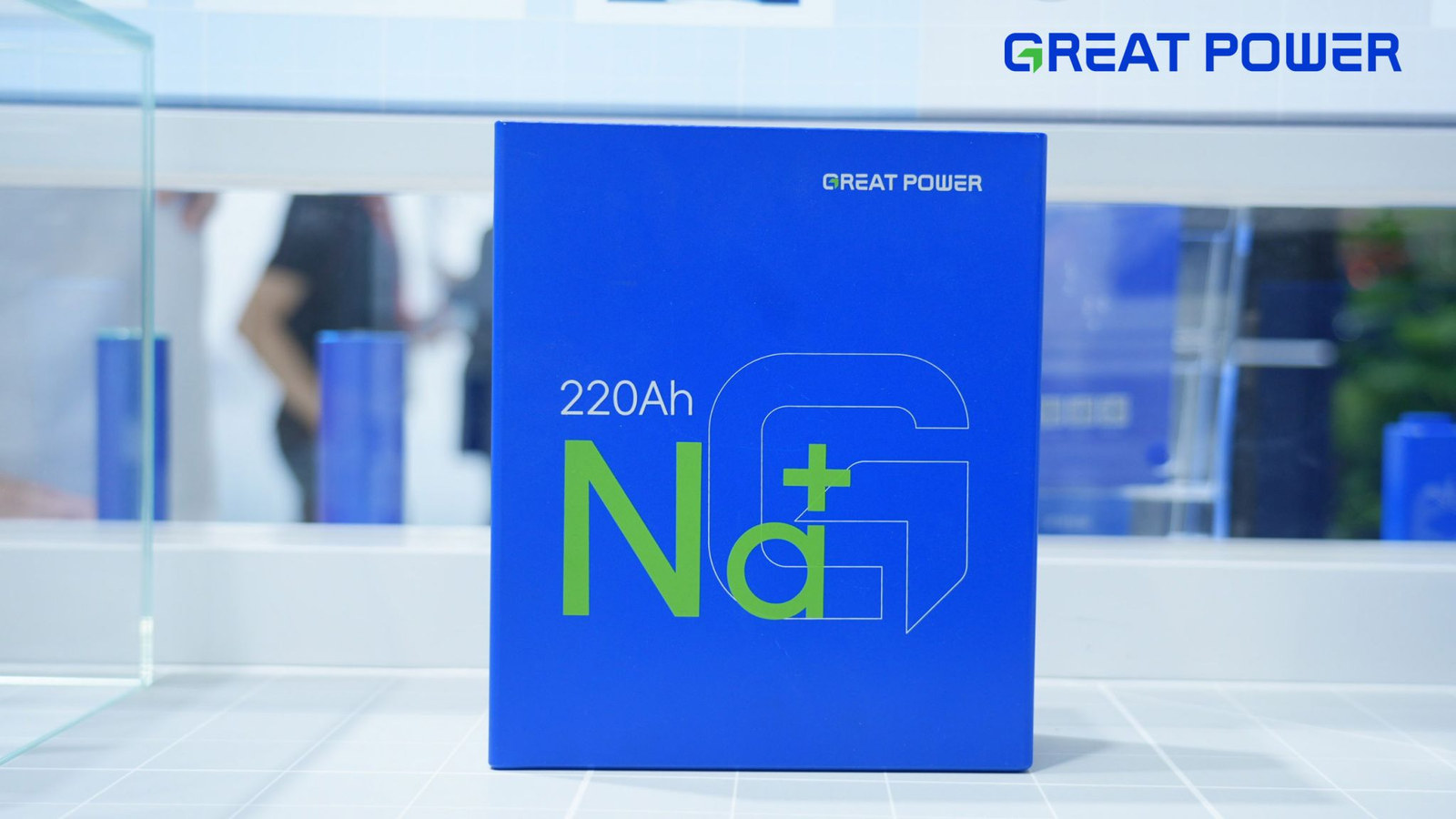
Material Routes Define the Electrochemical Starting Point
Sodium-ion technology is a category with multiple possible electrode systems, not one fixed recipe. Great Power began sodium-ion research in 2019 and expanded development in 2021 across layered-oxide and polyanion technical systems. These routes represent different material choices within the same broad chemistry.
Their voltage behavior, structural stability, processing, and temperature response have to be developed and verified at cell level before a product can move into a larger battery assembly. Our broader research platform covers cell structure, battery materials, safety, cycle life, efficiency, and high-temperature resistance. Those fields are connected.
A material that performs in a laboratory still has to be coated, assembled, controlled, and reproduced. Cell geometry affects current and heat paths, while production consistency affects whether samples from different lots behave within the intended range. This is why the science behind a new chemistry includes manufacturing and validation alongside electrochemical composition.
Abuse Tests Examine Different Failure Modes
The SIB26650 sodium-ion cell passed a national evaluation in China covering safety and performance tests, including thermal abuse, heavy impact, extrusion, forced over-discharge, and low-temperature discharge. Thermal abuse applies heat from outside the cell and observes its response. Heavy impact and extrusion impose mechanical damage through different force patterns.
Forced over-discharge pushes the electrical condition beyond normal operation, while low-temperature discharge examines performance in a cold environment. Passing one test does not answer the others because each condition stresses a different part of the design.
These evaluations also need a defined sample, method, limit, and result. The evidence applies to the tested cell and configuration, not automatically to future consumer batteries or systems. Consumer batteries, large stationary products, and specialized power sources can face very different mechanical, thermal, and electrical duties.
A sodium-ion cell therefore needs further integration work before its evidence can support a complete application, just as a custom lithium ion battery must be assessed within its own pack, control, and use conditions. Low-temperature discharge deserves attention because cold conditions slow electrochemical processes and change available power and voltage behavior.
The test shows how the evaluated cell performs under its method; it does not define every climate limit for a system. Pack heating, insulation, controls, and the intended load can alter application performance. Interpretation keeps the cell result connected to its conditions instead of turning it into a universal wide-temperature claim.
Development Milestones Show Increasing Manufacturing Commitment
Research establishes feasibility, while trial production asks whether the design can be repeated with production equipment and controlled materials. By 2022, Great Power had completed serial trial production and sample testing of small cylindrical sodium-ion batteries. Patent approvals connected with the layered-oxide and polyanion programs provide another record of technical development.
Neither milestone alone proves full market maturity, but together they show movement beyond a single laboratory specimen. Our R&D capabilities support work on battery materials, cell structures, safety, cycle life, efficiency, temperature performance, and manufacturing validation. These capabilities provide a foundation for research, testing, and validation.
Their practical value lies in connecting material research and cell development with repeatable manufacturing and application-specific testing. Scale-up also asks whether raw materials, electrode processing, assembly, and quality limits remain controlled as output rises.
Trial production can expose process variation that is not visible in a research batch. Sample testing then supplies feedback to the design and process teams. Great Power's development sequence links those activities, while later system work must add thermal management, electrical aggregation, monitoring, protection, and application-specific acceptance criteria.
Application Evidence Comes After Cell Evidence
We signed an agreement for a 5 MW/10 MWh sodium-ion battery energy storage demonstration project at the Qingdao North Coast Data Center. The agreement documents a planned application, but the signing itself does not establish completed commissioning or long-term operating performance. It should not be read as proof that every sodium-ion format is ready for every duty.
System capacity introduces packs, thermal management, electrical aggregation, controls, protection, installation, and service requirements that do not appear in a cell-only test. This distinction also keeps product categories clear.
Consumer batteries may share manufacturing disciplines with sodium-ion development, and our portfolio includes established lithium-based products, but sodium-ion is not a type of custom lithium ion battery. Its safety case has to follow its own materials, tested cell, production route, and proposed system.
The strongest conclusion is therefore staged: Great Power has advanced from research through trial production and evaluated cells toward a demonstration application, while every safety claim remains tied to the level of evidence that supports it.
 Consulting & Services

 Great Power
